


What is Acceptance and Commitment Therapy (ACT)?
Couples counseling using Acceptance and Commitment Therapy (ACT) is an evidence-based approach that helps partners improve communication, deepen emotional connection, and navigate conflict more effectively. Rather than attempting to eliminate difficult thoughts or emotions, ACT focuses on building psychological flexibility, allowing couples to respond to challenges in ways that align with their shared values.
ACT-based couples counseling is particularly effective for relationships experiencing recurring conflict, emotional distance, stress, or difficulty communicating needs in a healthy way.
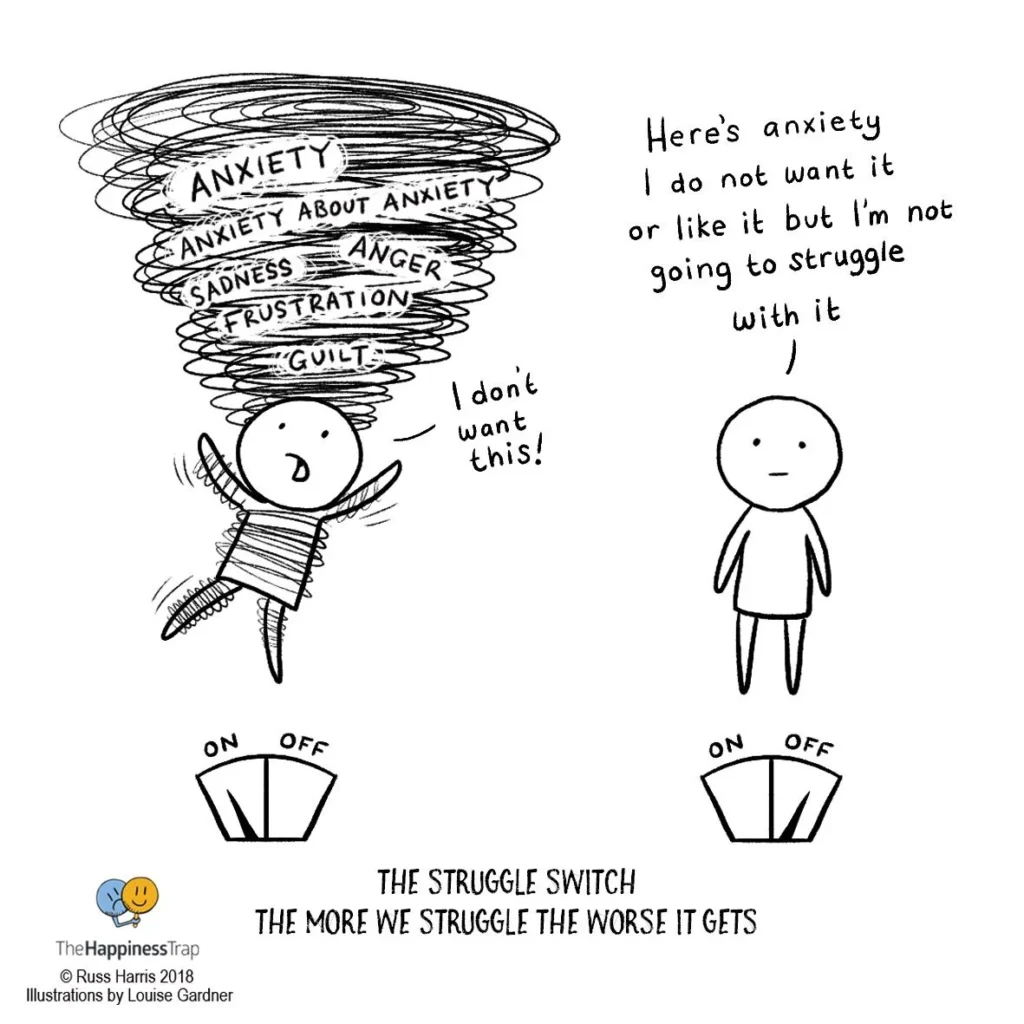
How ACT Works in Couples Counseling
ACT for couples is guided by six core processes that promote flexibility, emotional safety, and intentional action within the relationship.
ACCEPTANCE
Acceptance involves making room for uncomfortable emotions—such as frustration, sadness, or fear—without trying to suppress or avoid them. In couples counseling, acceptance helps partners stay emotionally open instead of becoming defensive or withdrawn during conflict.
Rather than asking, “How do we get rid of this feeling?” ACT asks, “How can we respond to this feeling in a way that supports our relationship?”
COGNITIVE DEFUSION
Cognitive defusion helps couples step back from rigid or automatic thoughts that fuel conflict, such as:
- “They never listen to me.”
- “This relationship will never change.”
- “If they cared, they would know.”
In ACT-based couples therapy, partners learn to observe these thoughts without treating them as facts—reducing emotional reactivity and blame.
PRESENT MOMENT AWARENESS
ACT emphasizes mindfulness and present-moment awareness, which allows couples to truly hear and understand each other. Instead of reacting based on past hurts or future fears, partners learn to stay grounded in the conversation happening right now.
Mindfulness skills in couples counseling can:
- Improve listening
- Reduce interruptions and defensiveness
- Increase emotional attunement
SELF AS A CONTEXT
Self-as-context encourages partners to recognize that they are more than their emotions, reactions, or roles in the relationship. This perspective helps couples approach conflict with curiosity rather than judgment and supports personal growth within the partnership.
VALUES CLARIFICATION
Values are at the heart of ACT couples counseling. Partners explore questions such as:
- What kind of partner do I want to be?
- What do we want our relationship to stand for?
- How do we want to treat each other during conflict?
Clarifying shared and individual values helps couples move away from power struggles and toward purposeful connection.
COMMITTED ACTION
Committed action involves taking meaningful, values-aligned steps—even when emotions are difficult. In couples counseling, this might include:
- Practicing respectful communication during disagreements
- Initiating repair after conflict
- Prioritizing connection despite stress or discomfort
Small, consistent actions build trust and reinforce emotional safety over time.
Common Relationship Issues ACT Helps Address
ACT-based couples counseling is effective for a wide range of relationship concerns, including:
COMMUNICATION PROBLEMS
ACT helps couples slow down reactive communication patterns and respond with intention and clarity.
RECURRING CONFLICT
By addressing unhelpful thought patterns and emotional avoidance, ACT reduces cycles of blame and escalation.
EMOTIONAL DISTANCE
Mindfulness and values-based connection help partners rebuild closeness and intimacy.
STRESS & LIFE TRANSITIONS
ACT supports couples navigating parenting, career changes, illness, or major life stressors.
TRUST & REPAIR
ACT provides a structured framework for rebuilding trust through accountability and committed action.
Benefits of Couples Using ACT
Couples who engage in ACT-based relationship therapy often experience:
- Improved communication and listening skills
- Greater emotional awareness and empathy
- Reduced conflict intensity and duration
- Increased relationship satisfaction
- Stronger alignment around shared values
Research suggests ACT improves psychological flexibility, which is closely linked to healthier relationship functioning and emotional resilience.
What Couples Using ACT is Not
ACT does not aim to:
- Decide who is right or wrong
- Eliminate all conflict
- Force emotional disclosure
Instead, ACT helps couples learn how to stay connected during difficulty and act in ways that support long-term relationship health.
Is ACT Couples Counseling Right for You?
ACT may be a good fit if you and your partner:
- Feel stuck in repetitive arguments
- Want practical tools rather than blame-focused therapy
- Struggle with emotional avoidance or shutdown
- Value growth, mindfulness, and intentional living
ACT can be used on its own or integrated with other evidence-based approaches such as EFT or CBT, depending on the couple’s needs.
Strengthening Your Relationship Through ACT
Couples counseling using ACT focuses on helping partners show up for each other with awareness, compassion, and purpose. By learning to accept difficult emotions and commit to values-based action, couples can move from reactive patterns to intentional connection.
ACT doesn’t promise a conflict-free relationship—it offers something more sustainable: the skills to navigate challenges together while staying emotionally connected.