


There is a particular kind of exhaustion that comes from not trusting your partner.
It isn’t always dramatic. Sometimes it looks like checking your partner’s phone when they’re in the shower. Sometimes it’s noticing a change in their tone and immediately wondering what it means. Sometimes it’s asking a simple question and then spending the next three hours analyzing the answer.
And sometimes the problem isn’t that you are “too suspicious.”
Something actually happened.
Maybe there was an affair. Maybe there were deleted messages, financial secrets, pornography, substance use, broken promises, or years of small lies that eventually added up to something much bigger. Maybe your partner tells you that nothing is wrong, but your body doesn’t believe them.
This is where couples can get stuck.
One person is trying desperately to feel safe again. The other is exhausted from feeling monitored, questioned, or perpetually guilty. The more one partner pursues reassurance, the more the other withdraws. The more the other withdraws, the more suspicious and anxious the first partner becomes.
Now you’re fighting about the fighting.
This is one of the patterns I see when providing couples therapy in Massachusetts: the original problem can eventually become secondary to the cycle that develops around it.
Couples rebuild trust.
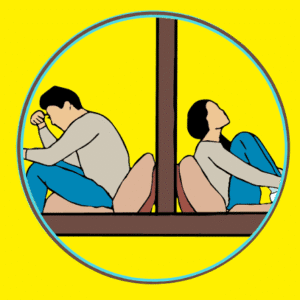
Trust Is Not the Same Thing as Blind Faith
Trust in a relationship is sometimes treated as a personality trait.
“You’re just not trusting.”
“You’re too jealous.”
“You need to let it go.”
That can be incredibly invalidating when trust was actually damaged.
Healthy trust isn’t blind faith. It is a reasonable expectation that your partner’s words, behavior, and commitments will generally line up.
When that alignment is disrupted, your brain starts looking for information.
Is what I’m being told actually true?
Can I rely on this person?
Will they tell me the truth when the truth is uncomfortable?
Are they going to do what they say they’re going to do?
Do I have to protect myself?
Those are not necessarily irrational questions.
In fact, after betrayal, heightened vigilance can make a lot of sense. The problem is that vigilance can eventually become its own source of suffering. A relationship can become organized around checking, proving, defending, explaining, and reassuring rather than connection.
This is one reason rebuilding trust in a relationship for a couple in Massachusetts requires more than telling the hurt partner to “move on.”
Broken Trust Doesn’t Always Mean Infidelity
When people hear “relationship betrayal,” they often immediately think of cheating.
Infidelity can absolutely devastate a relationship. But couples can lose trust in many other ways.
Trust may be damaged by:
- Repeated lying
- Emotional affairs
- Secret texting or dating apps
- Financial secrecy
- Broken agreements
- Substance use that is hidden from a partner
- Repeatedly promising to change without changing
- Withholding important information
- Sexual secrecy
- Chronic emotional avoidance
- Major decisions made without consulting the other partner
- A pattern of minimizing or denying your partner’s experience
Sometimes there is one major rupture.
Sometimes there are 100 smaller ruptures.
And sometimes the most painful realization is that the relationship has gradually become a place where you no longer feel emotionally safe.
Why Couples Get Stuck in the Pursue-Withdraw Cycle
One of the most useful things about couples therapy is that we stop asking only, “Who started this?”
Instead, we start looking at what happens next.
Imagine this:
One partner says, “I don’t believe you.”
The other says, “I’ve answered this question five times.”
The first partner becomes more anxious and asks another question.
The second partner becomes defensive and shuts down.
The first partner follows them around the house trying to get an answer.
The second partner gets angrier and withdraws further.
Now both people feel justified.
And both people are miserable.
This is often called a pursue-withdraw cycle.
The pursuing partner may look controlling, demanding, or overly anxious from the outside. But underneath the behavior may be fear:
“If I can just get enough information, maybe I can finally feel safe.”
The withdrawing partner may look uncaring or emotionally unavailable. But underneath the withdrawal may be shame, defensiveness, overwhelm, or the belief that nothing they say will ever be enough.
Neither person’s behavior is necessarily creating the result they want.
The person pursuing reassurance isn’t becoming safer.
The person withdrawing isn’t creating peace.
They’re reinforcing the cycle.
What the Gottman Method Says About Trust
The Gottman Method is particularly useful in couples counseling because it doesn’t pretend that healthy relationships are conflict-free.
John and Julie Gottman’s research has focused extensively on friendship, conflict management, emotional connection, and the behaviors that predict relationship stability.
The Gottman framework helps couples recognize patterns, respond to bids for connection, manage conflict, repair after hurt, and strengthen the friendship underneath the relationship.
The Gottman Institute describes trust as something that develops through everyday interactions—not one grand declaration of love or commitment.
The Gottman Institute — Trust and Commitment
That distinction matters enormously when you’re trying to rebuild trust after infidelity or betrayal.
Trust isn’t rebuilt because someone says:
“You have to believe me.”
It is rebuilt because, over time, the other person experiences:
“What you say and what you do are becoming consistent again.”
Rebuilding Trust Requires Behavior, Not Just Promises
One of the hardest truths in relationship therapy is that the person who broke trust cannot simply demand that their partner trust them again.
Trust has to be earned.
That doesn’t mean the hurt partner gets unlimited permission to punish the other person indefinitely. It means that both people have responsibilities in the repair process.
The partner who caused the rupture may need to demonstrate:
- Accountability without defensiveness
- Transparency
- Consistency
- Follow-through
- Willingness to answer reasonable questions
- Empathy for the other person’s pain
- A willingness to tolerate discomfort rather than escaping it
- Clear boundaries around whatever contributed to the betrayal
The hurt partner, meanwhile, may eventually need to work toward:
- Expressing fear without attacking
- Distinguishing present evidence from past injury
- Communicating what would actually help them feel safer
- Allowing trust to develop gradually
- Recognizing when reassurance has become compulsive rather than useful
- Deciding what boundaries they need if trust cannot be restored
This is not about making both partners equally responsible for the betrayal.
They are not necessarily equally responsible for what happened.
They are, however, both responsible for what happens next.

What If Your Partner Says, “You’ll Never Trust Me Anyway”?
This statement comes up often.
And sometimes there is truth underneath it.
A partner may genuinely feel that no amount of transparency will ever be enough.
But this can also become a way of prematurely ending the repair process.
A more useful question is:
“What would rebuilding trust actually look like?”
That question gets you out of the vague territory of “I need you to trust me” and into something measurable.
What behaviors would demonstrate reliability?
What information needs to be shared?
What boundaries need to change?
What conversations keep going badly?
What does accountability look like?
What would make the injured partner feel that the relationship is moving forward rather than simply returning to the way things were?
These are the conversations couples therapy can help you have.
The Goal Isn’t to Go Back to the Relationship You Had Before
This may be the most important part.
After betrayal, many couples become obsessed with getting back to normal.
But “normal” is often exactly what wasn’t working.
If trust was broken, the goal isn’t necessarily to recreate the relationship exactly as it existed before.
The goal is to build something more honest.
A relationship where difficult things can actually be discussed.
A relationship where boundaries are explicit rather than assumed.
A relationship where both people can say, “This isn’t working for me,” without fearing that the conversation will immediately become a war.
A relationship where intimacy isn’t dependent on pretending everything is fine.
Sometimes couples call this relationship repair.
I think of it more simply:
You are trying to build a relationship that can hold the truth.
What Couples Therapy for Trust Issues Actually Looks Like
Couples therapy isn’t supposed to be a weekly courtroom where the therapist determines which partner is right.
At least, that’s not how I approach it.
My job is to help the two of you slow the pattern down enough to actually see it.
What happened?
What meaning did each person make of it?
What happens when the subject comes up?
What does each person do next?
What are you afraid will happen if you stop defending yourself?
What are you afraid will happen if you stop pursuing your partner?
What does each of you need in order to feel emotionally safer?
And perhaps most importantly:
What are you both willing to do differently?
My approach to couples therapy is direct and practical. I use the Gottman Method alongside Acceptance and Commitment Therapy (ACT) to help couples identify destructive cycles, improve communication, repair conflict, and rebuild connection.
You can read more about my approach to the Gottman Method and couples therapy.
When Trust Issues Are Really About Emotional Safety
There is an important distinction between ordinary relationship insecurity and a relationship in which someone genuinely does not feel safe.
If your partner repeatedly lies, intimidates you, manipulates you, threatens you, controls your finances, isolates you, or retaliates when you set boundaries, couples therapy may not be the first intervention to pursue.
Trust cannot be repaired through better communication when someone is continuing to behave in ways that make the relationship unsafe.
If you are concerned about emotional or physical abuse, the National Domestic Violence Hotline provides confidential information and support.
For couples who are dealing with betrayal, secrecy, conflict, or emotional disconnection without ongoing abuse, relationship therapy can provide a structured environment for understanding what happened and determining what comes next.
How Long Does It Take to Rebuild Trust?
Unfortunately, there isn’t a clean timeline.
You cannot schedule six weeks of therapy and expect your nervous system to announce that trust has been restored.
Some couples make meaningful progress relatively quickly. Others need much longer, particularly when there has been repeated betrayal or when the injury has been sitting underneath the relationship for years.
Progress may look surprisingly ordinary.
Your partner tells you something difficult—and you believe them.
You have an argument and neither of you threatens the relationship.
Someone becomes upset and the other person doesn’t immediately become defensive.
You notice yourself wanting to check the phone, but instead you say, “I’m feeling insecure right now.”
Your partner hears that without mocking you.
You make an agreement.
And then, importantly, you keep it.
Those moments can seem small.
They aren’t.
That is how trust gets rebuilt

You Don’t Have to Decide the Entire Future of Your Relationship Today
Couples often come to therapy wanting an immediate answer:
Should we stay together?
Can this relationship actually be repaired?
Can I ever trust my partner again?
Sometimes those questions have clear answers.
Often they don’t—not yet.
Therapy doesn’t have to begin with a commitment to stay married forever.
It can begin with curiosity.
Can we understand what happened?
Can we stop hurting each other in the same ways?
Can we have a conversation without it turning into the same argument?
Can trust be rebuilt?
Can we create a relationship that feels different from the one we’re living in now?
Those are much more useful questions.
Couples Therapy for Trust Issues in Massachusetts
If you and your partner are struggling with distrust, infidelity, secrecy, recurring conflict, or emotional disconnection, you don’t necessarily need to wait until the relationship is in complete crisis to seek help.
Couples counseling can give you a place to slow things down and understand the pattern you’re caught in.
I provide couples therapy for partners in Massachusetts and work with couples who are dealing with broken trust, communication problems, intimacy concerns, infidelity recovery, and relationships that have simply started to feel disconnected.
My style is straightforward, compassionate, and practical. I don’t believe couples need more generic advice about “communicating better.”
You need to understand what keeps happening between the two of you—and learn how to do something different.
You can learn more about couples therapy at The Rising Sun Counseling.
You don’t have to know whether your relationship can be completely repaired before reaching out.
You just have to be willing to find out.